
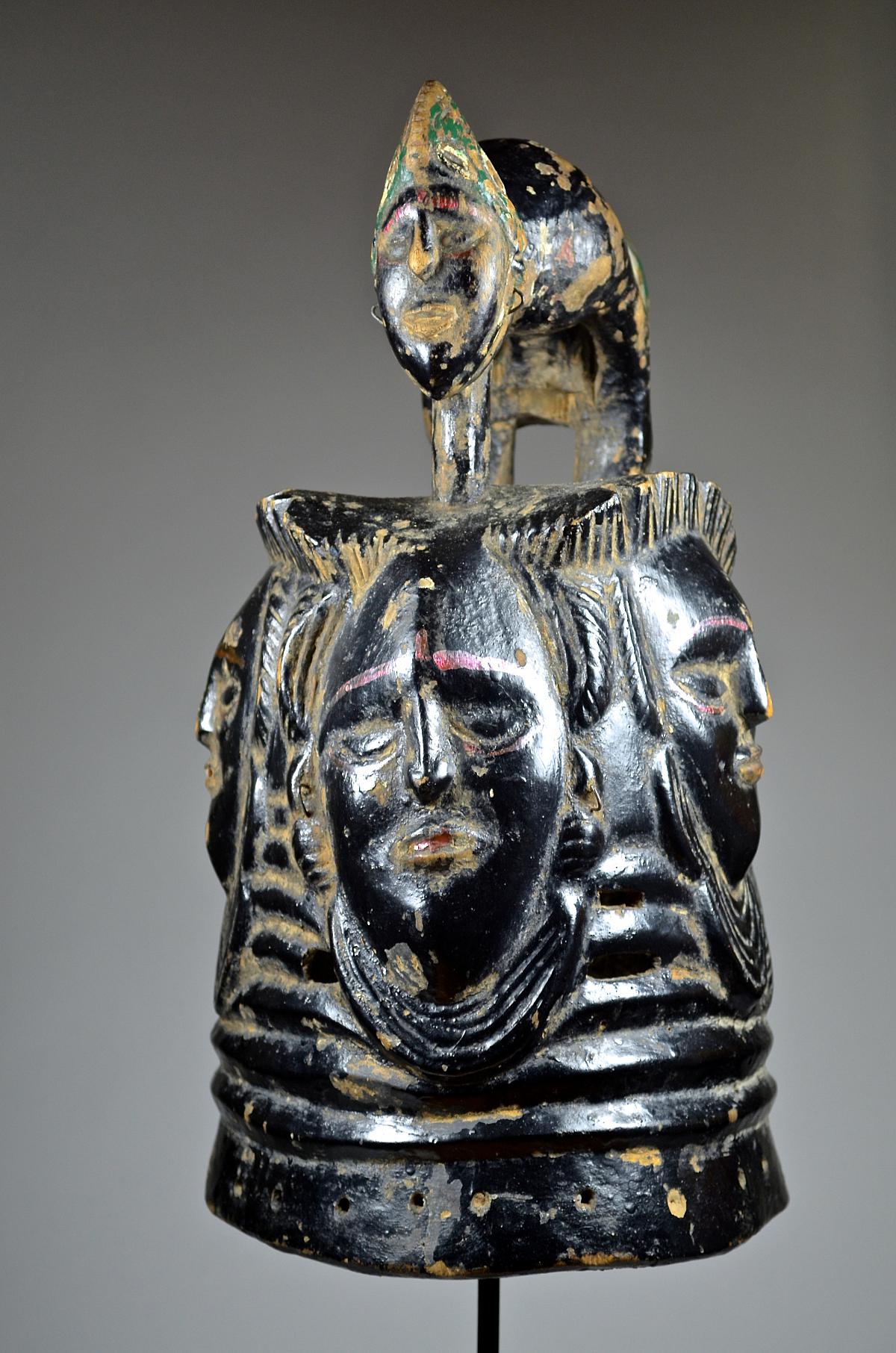
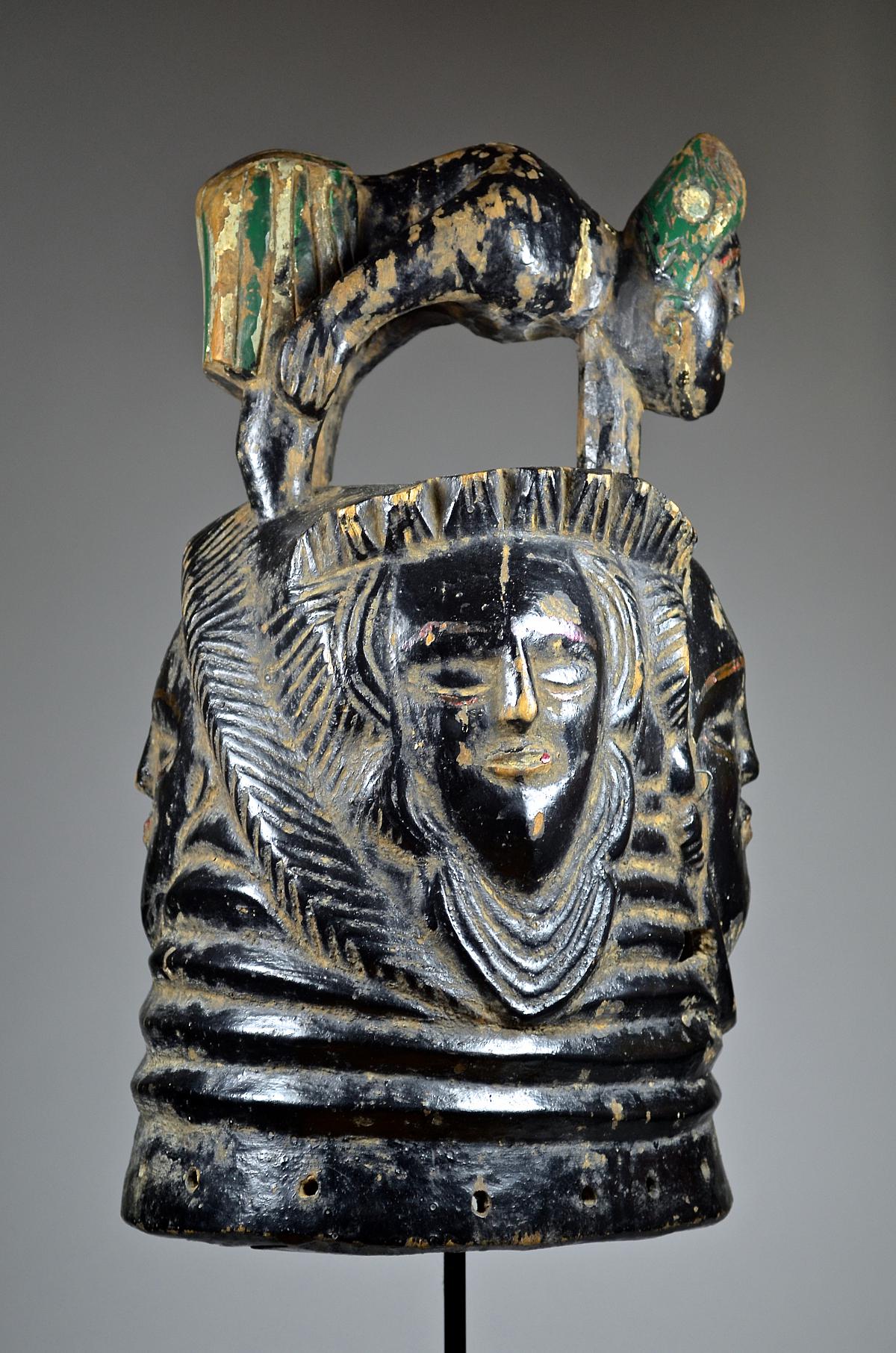


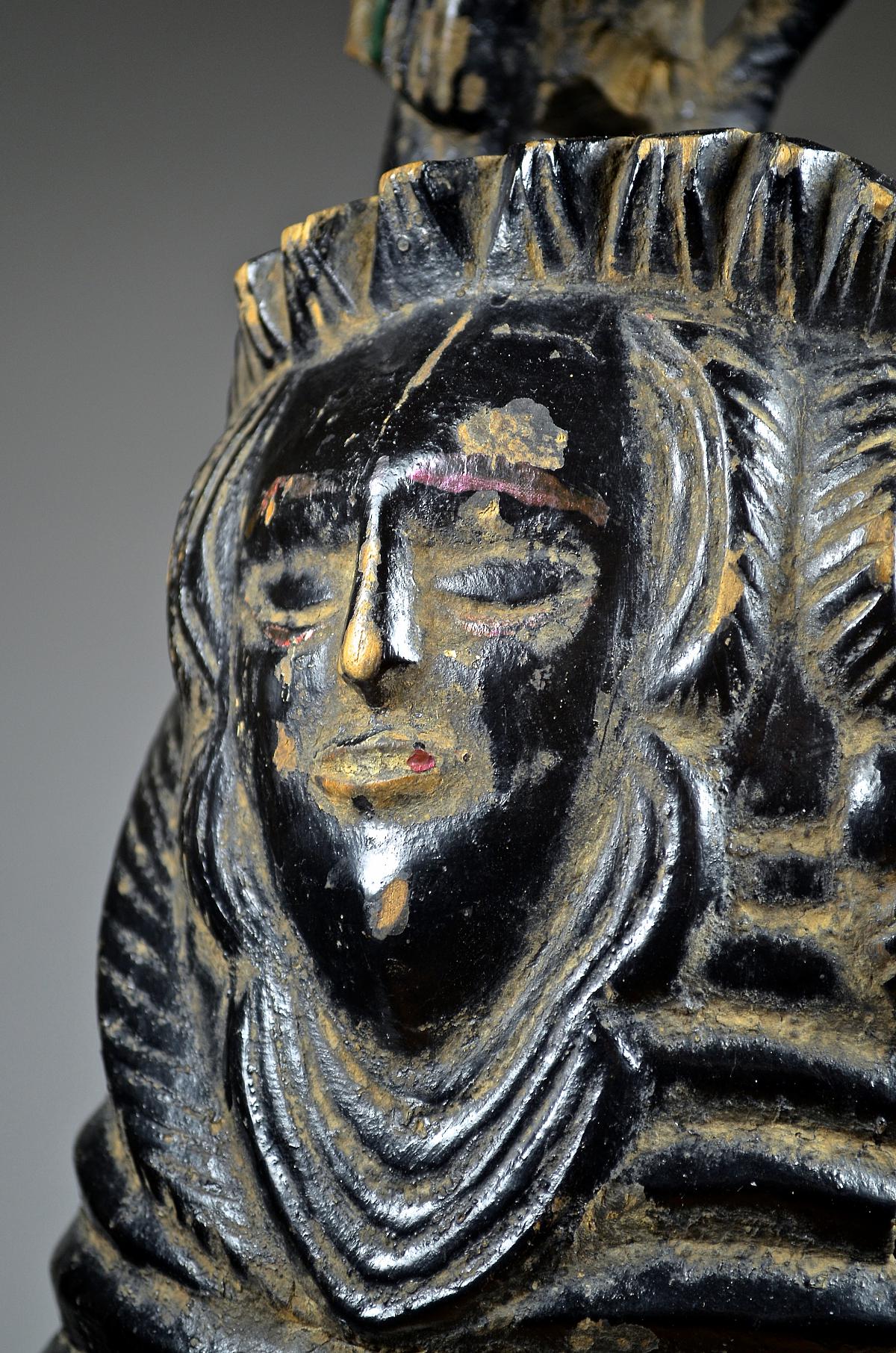
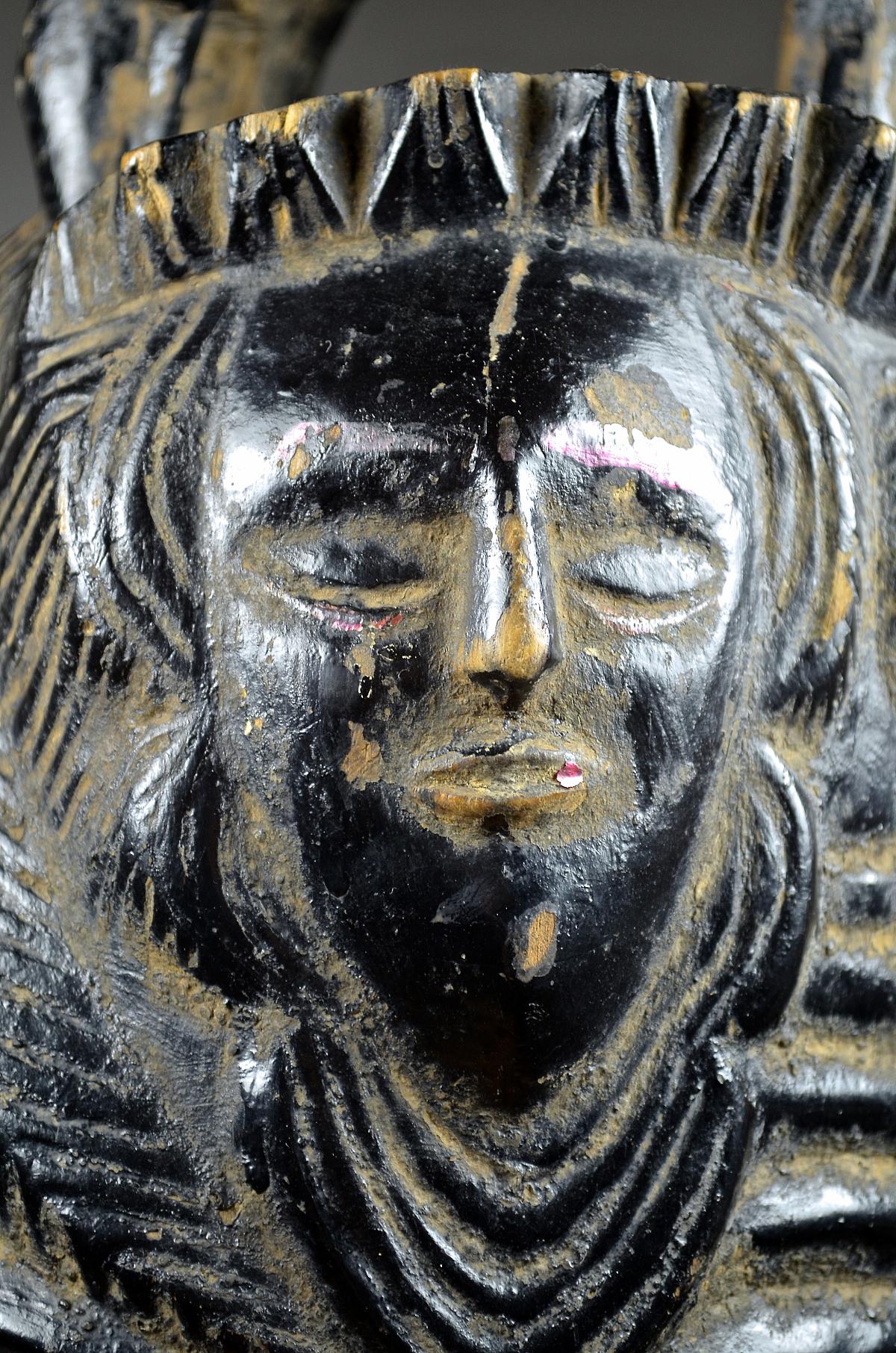


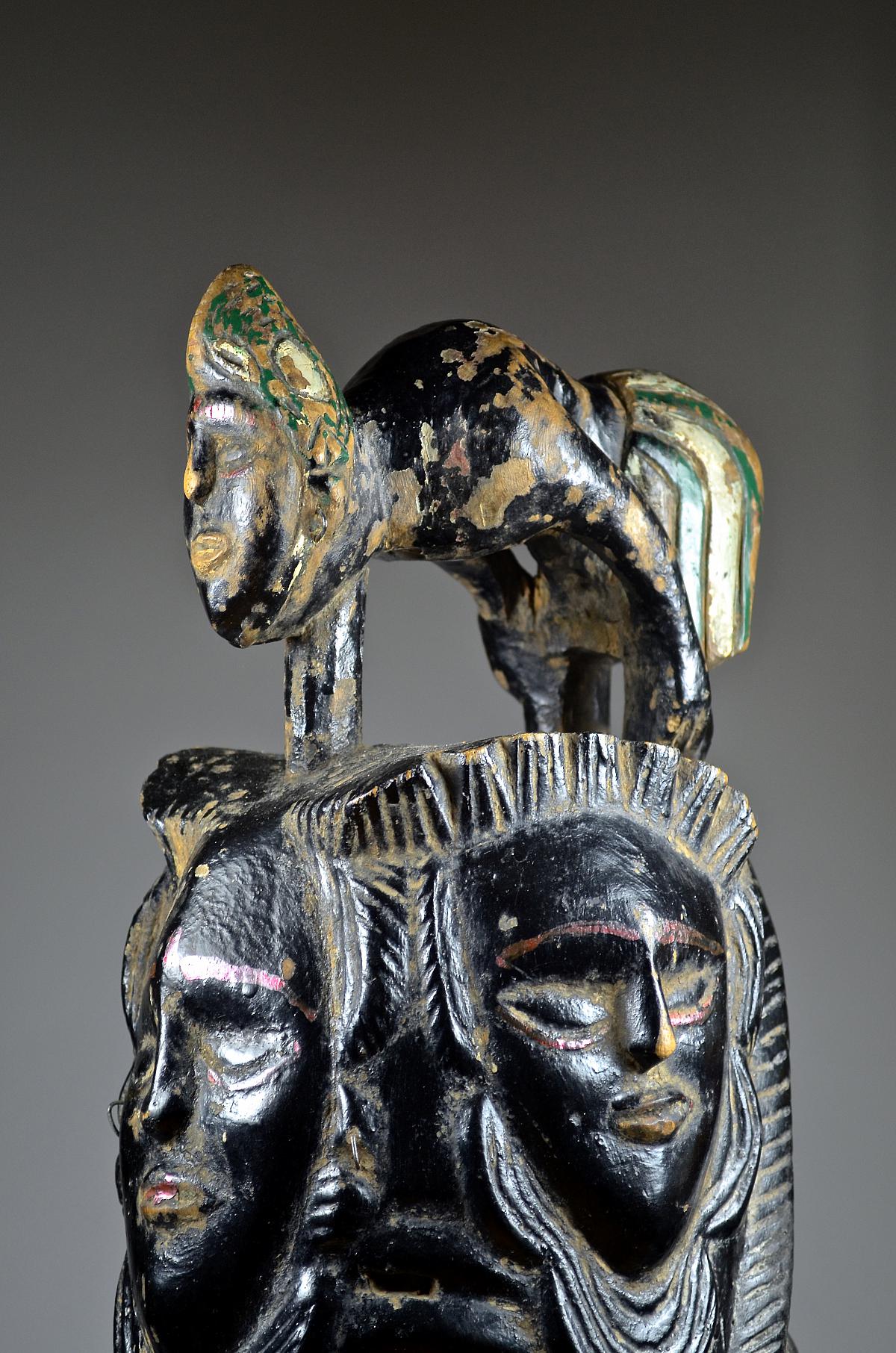
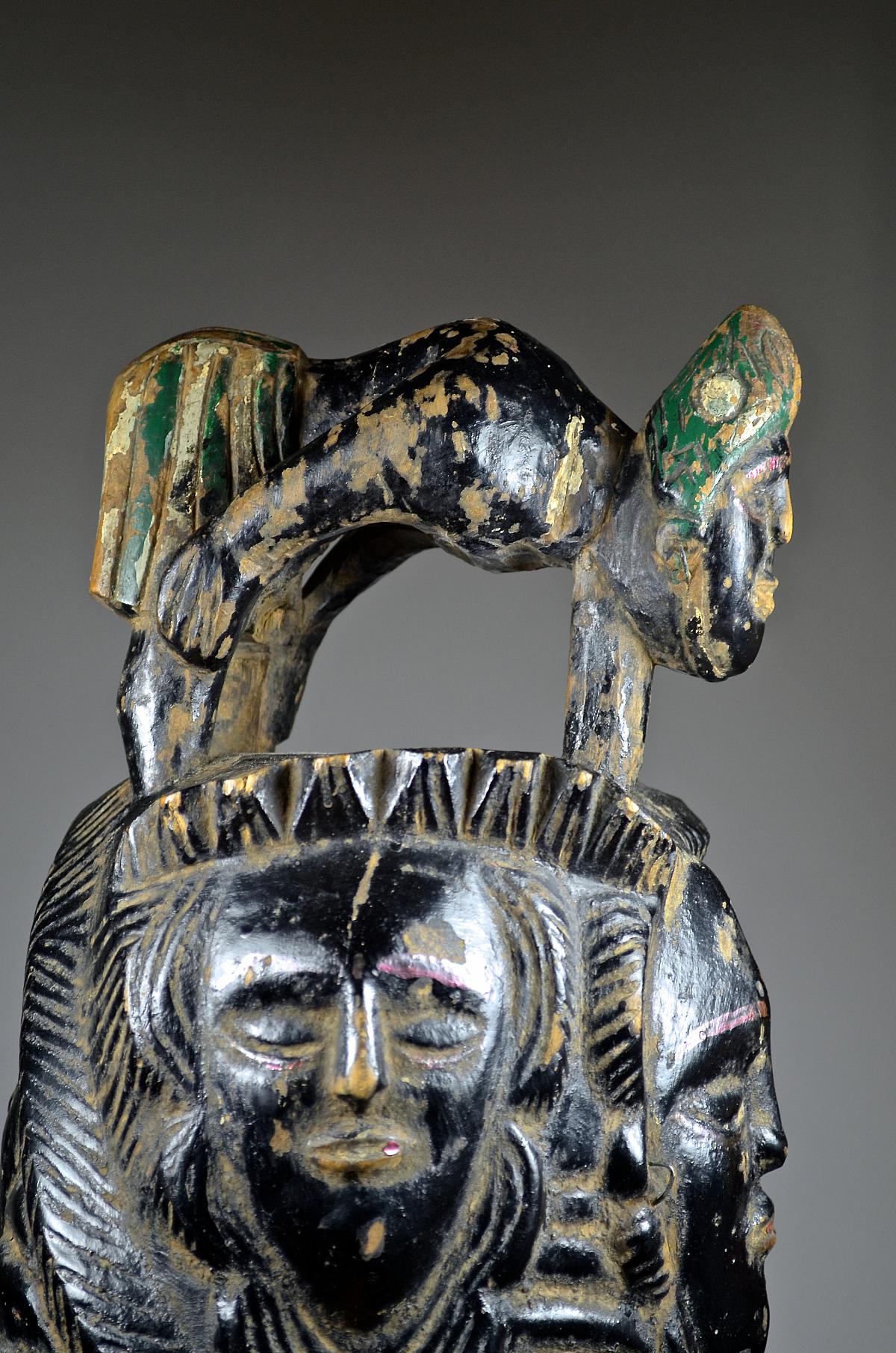
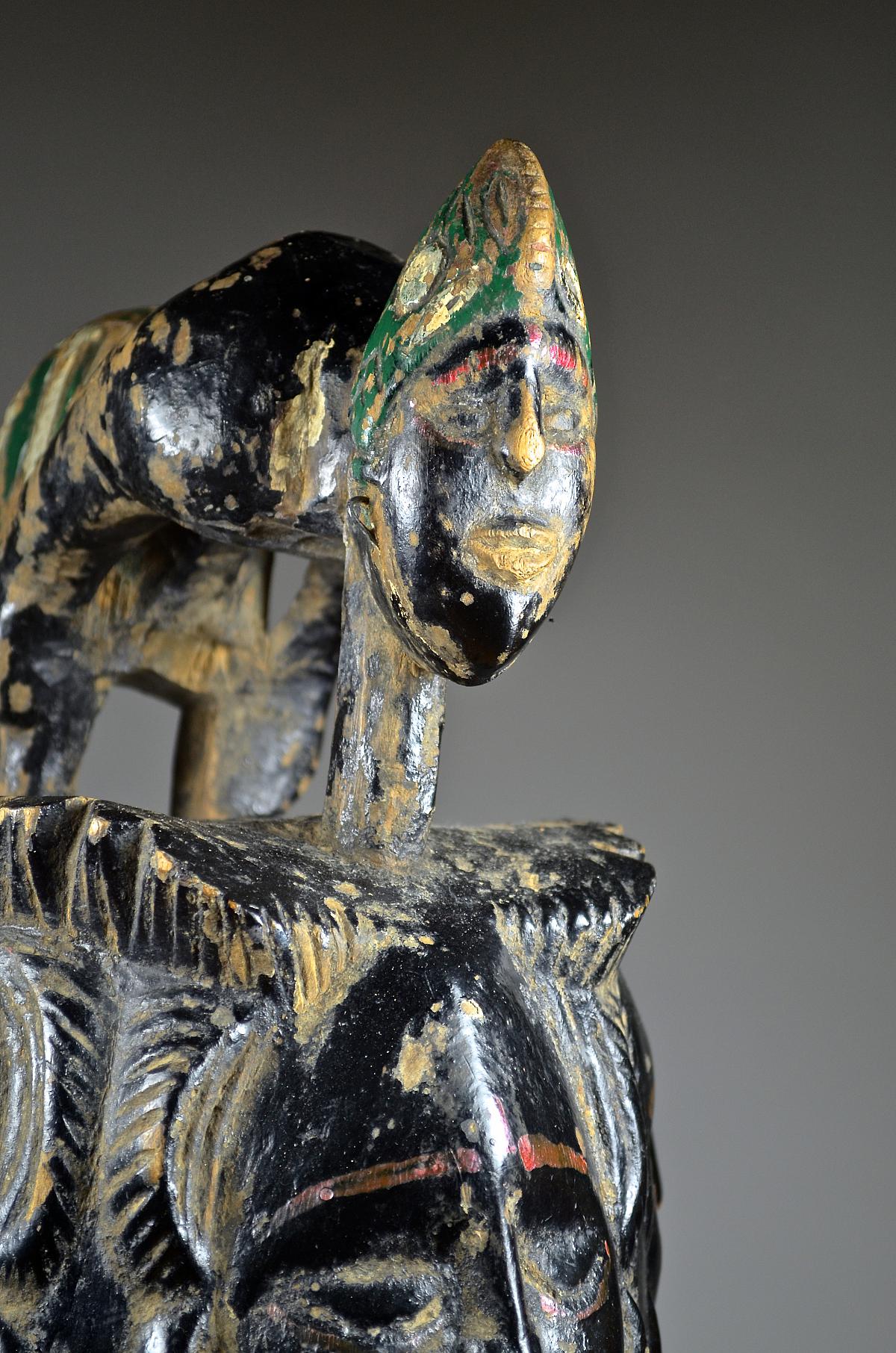
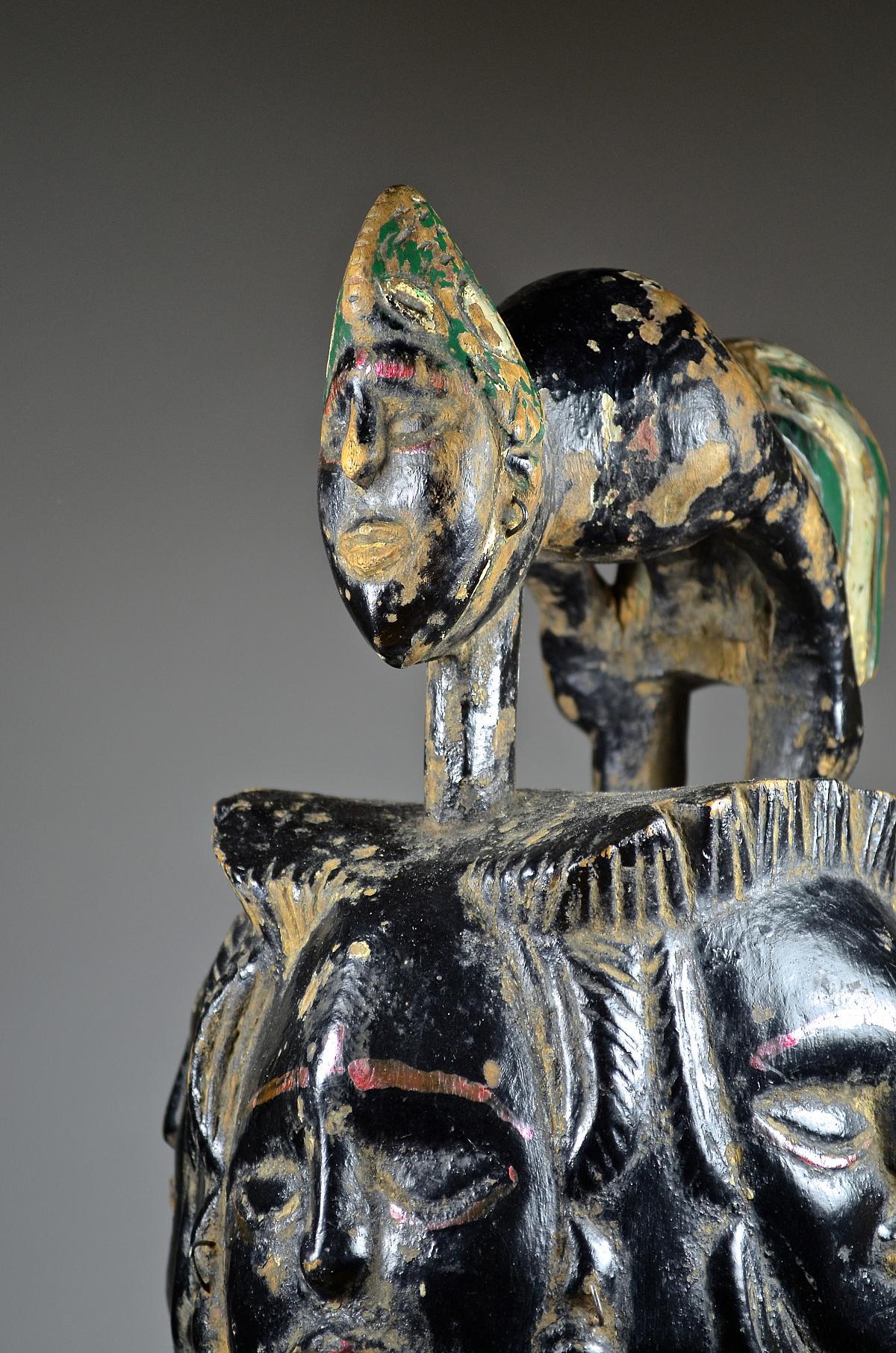
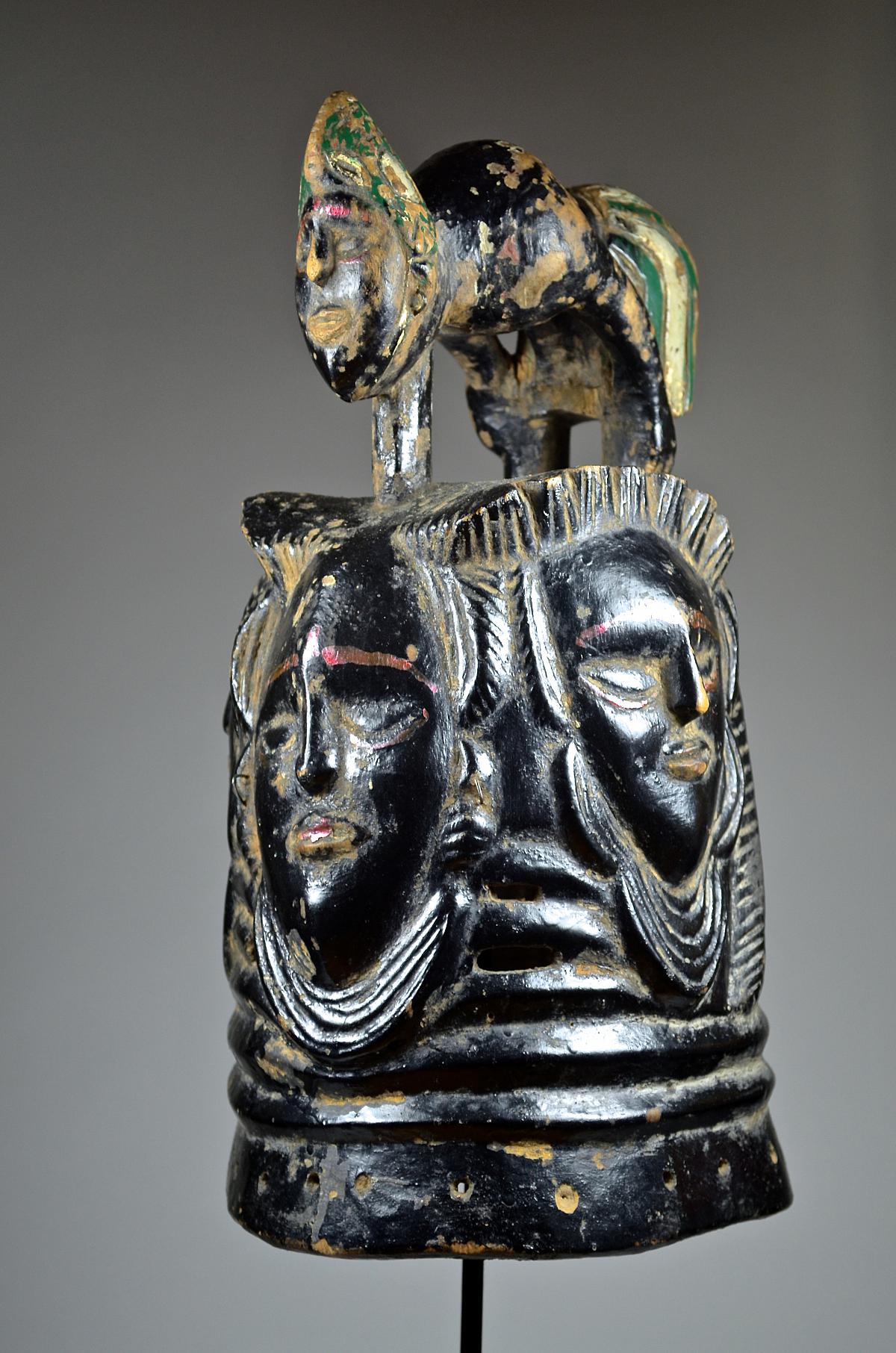

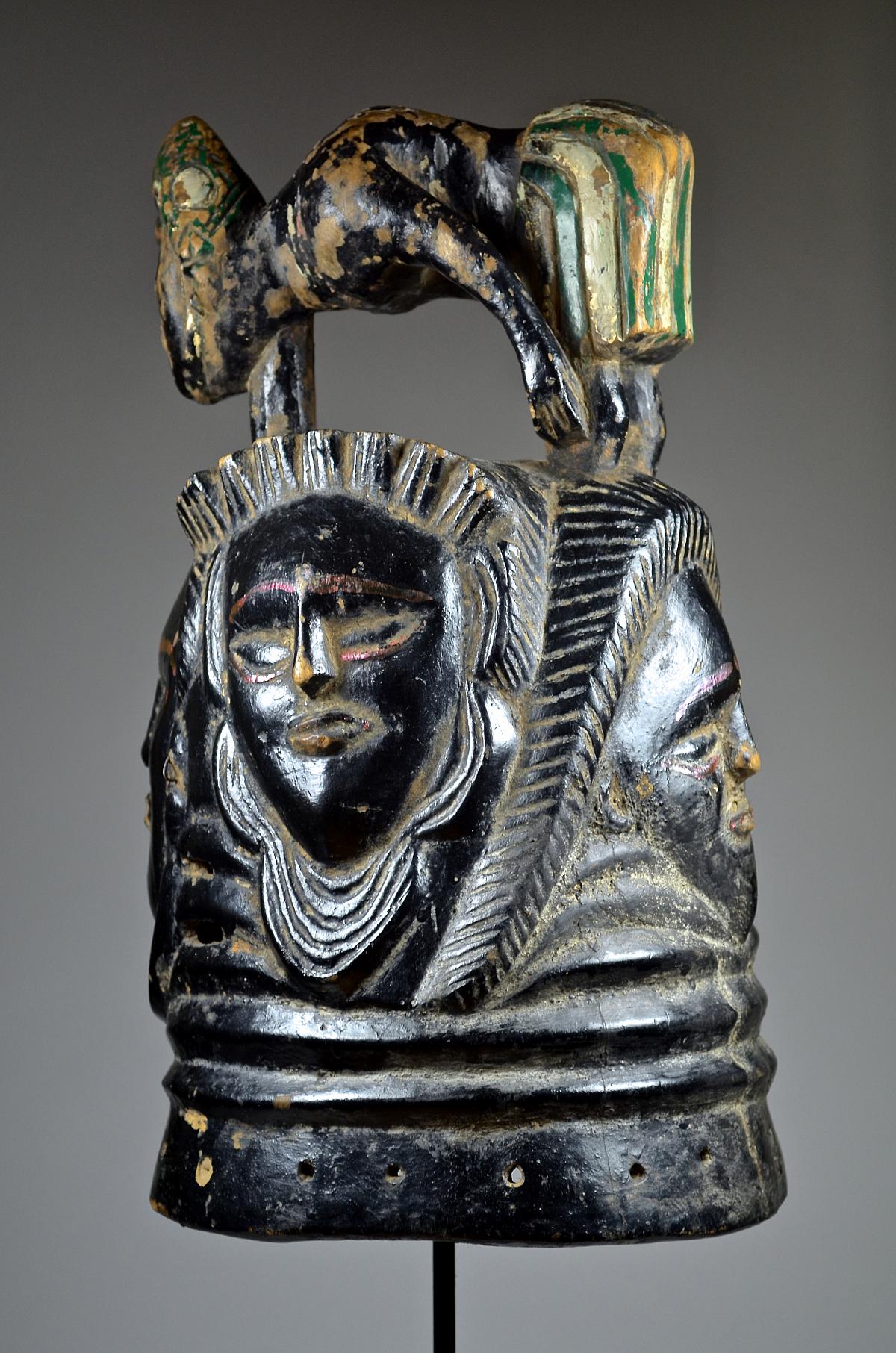
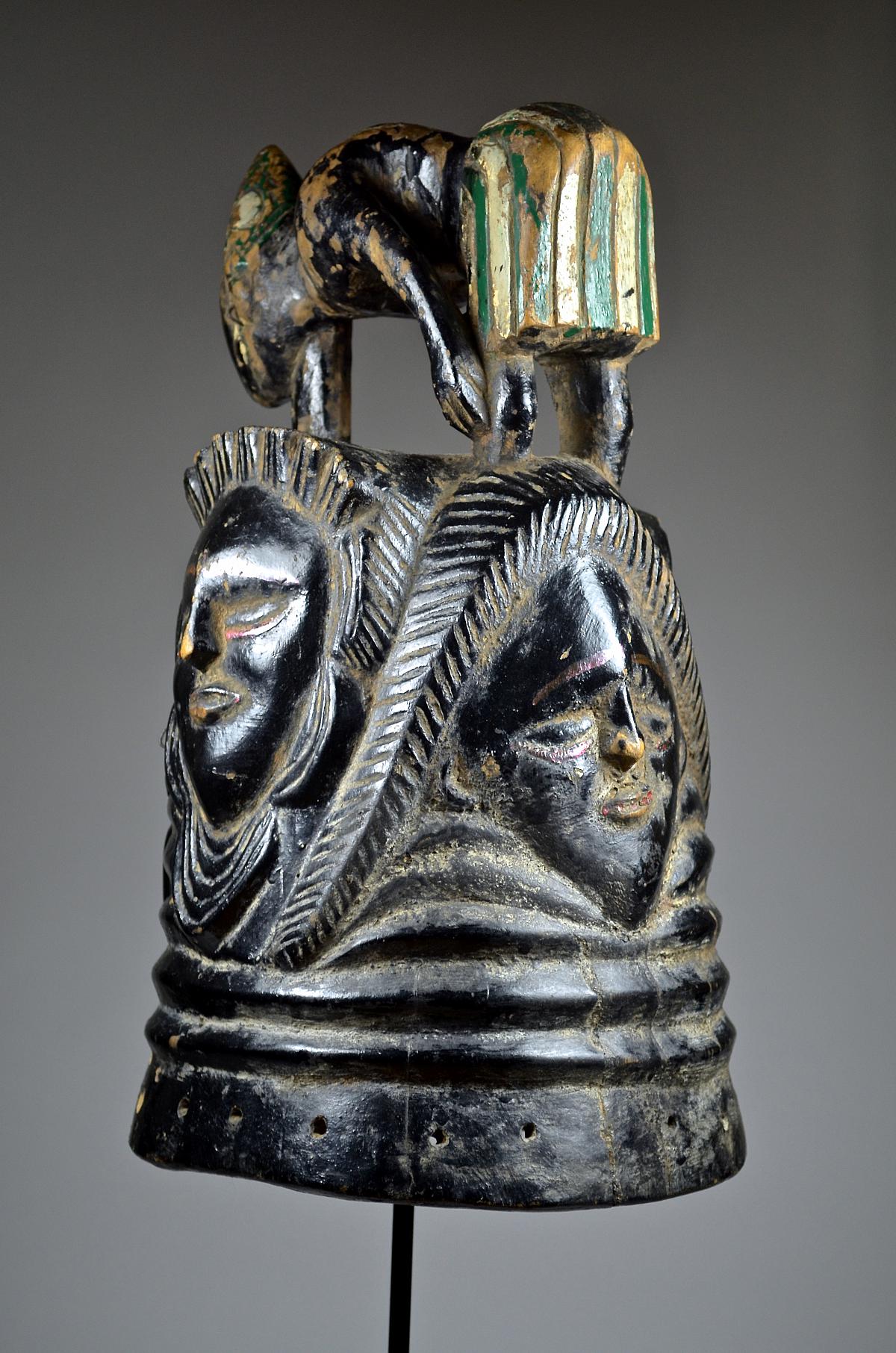
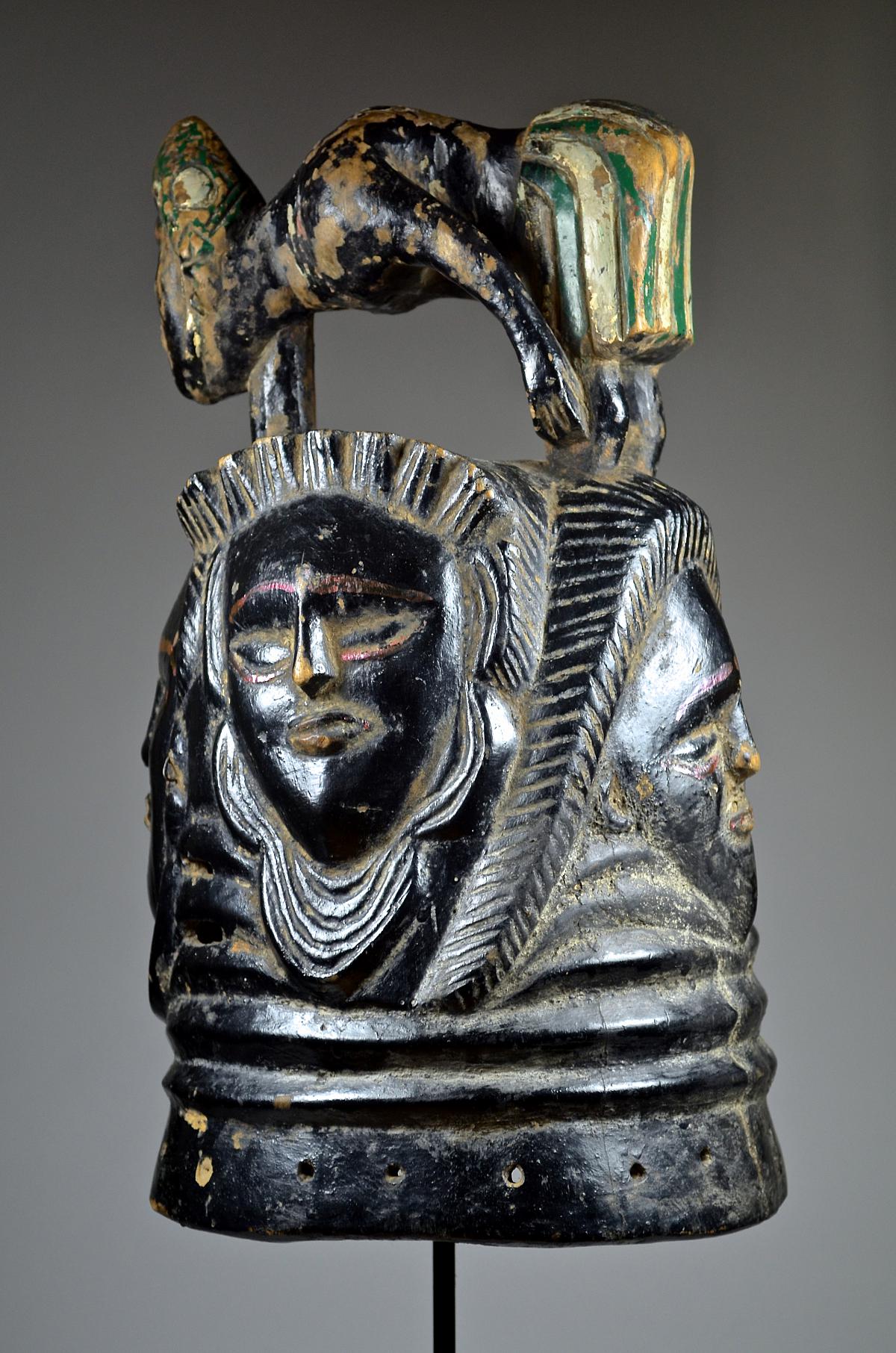
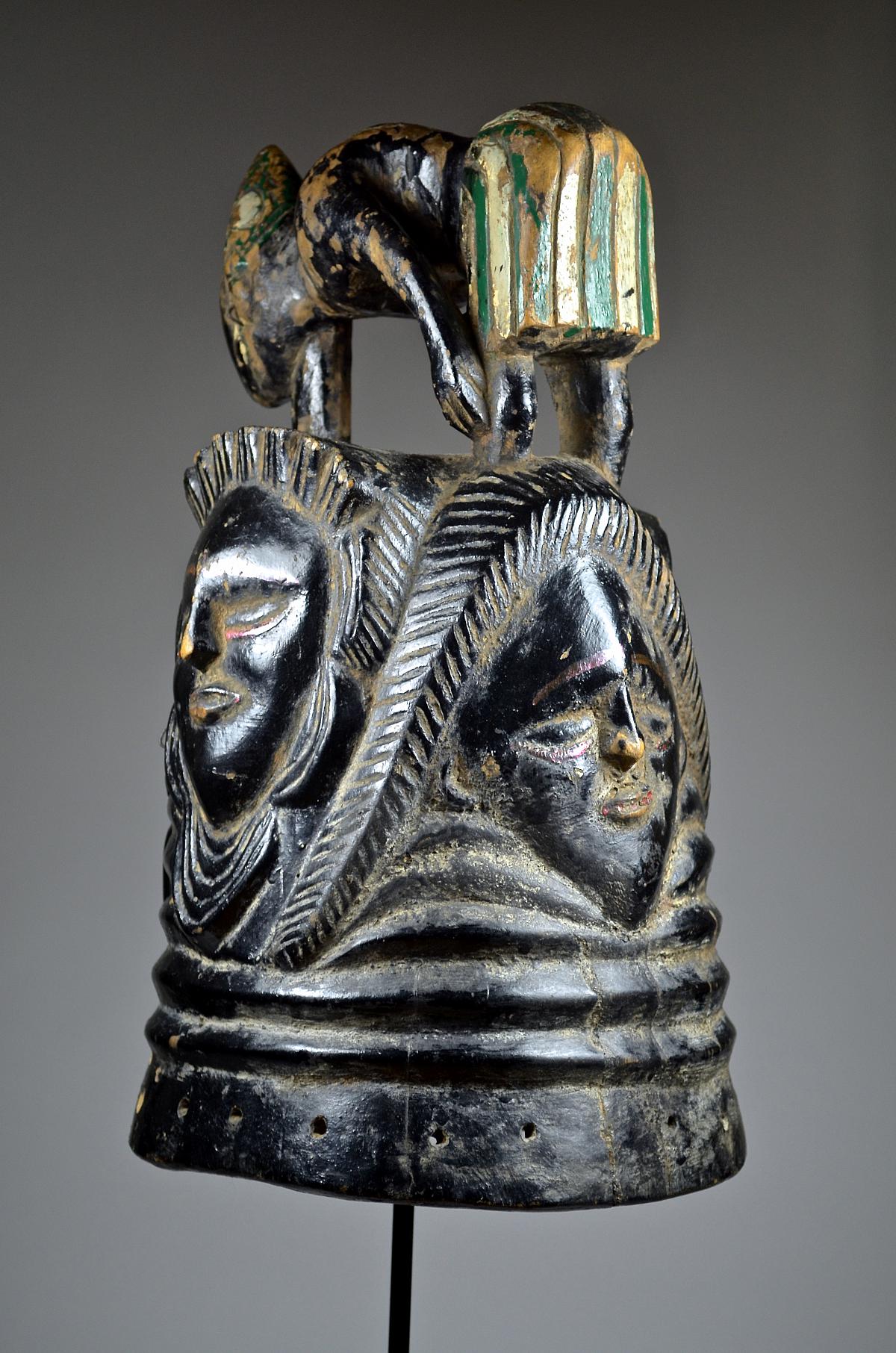


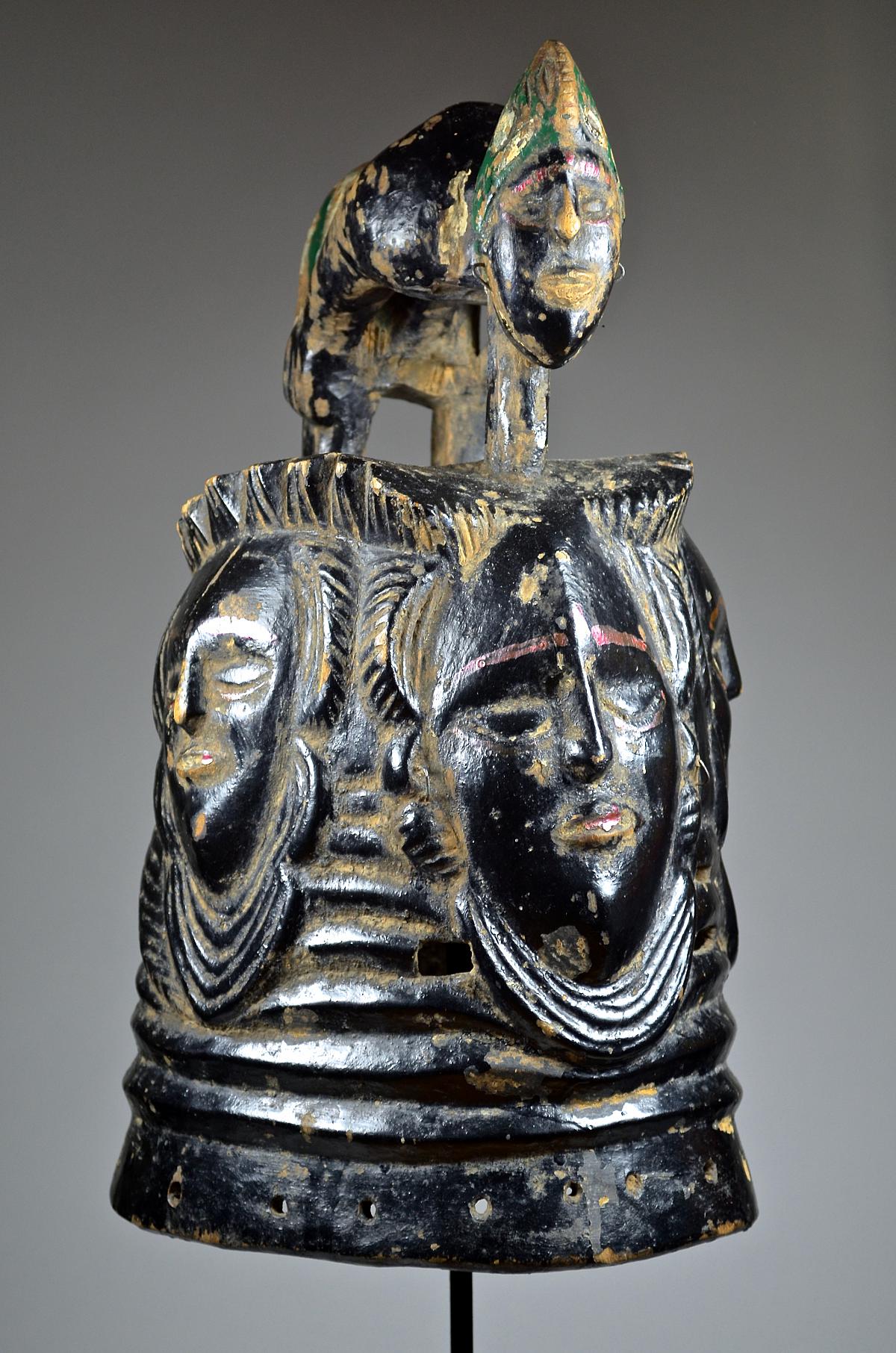
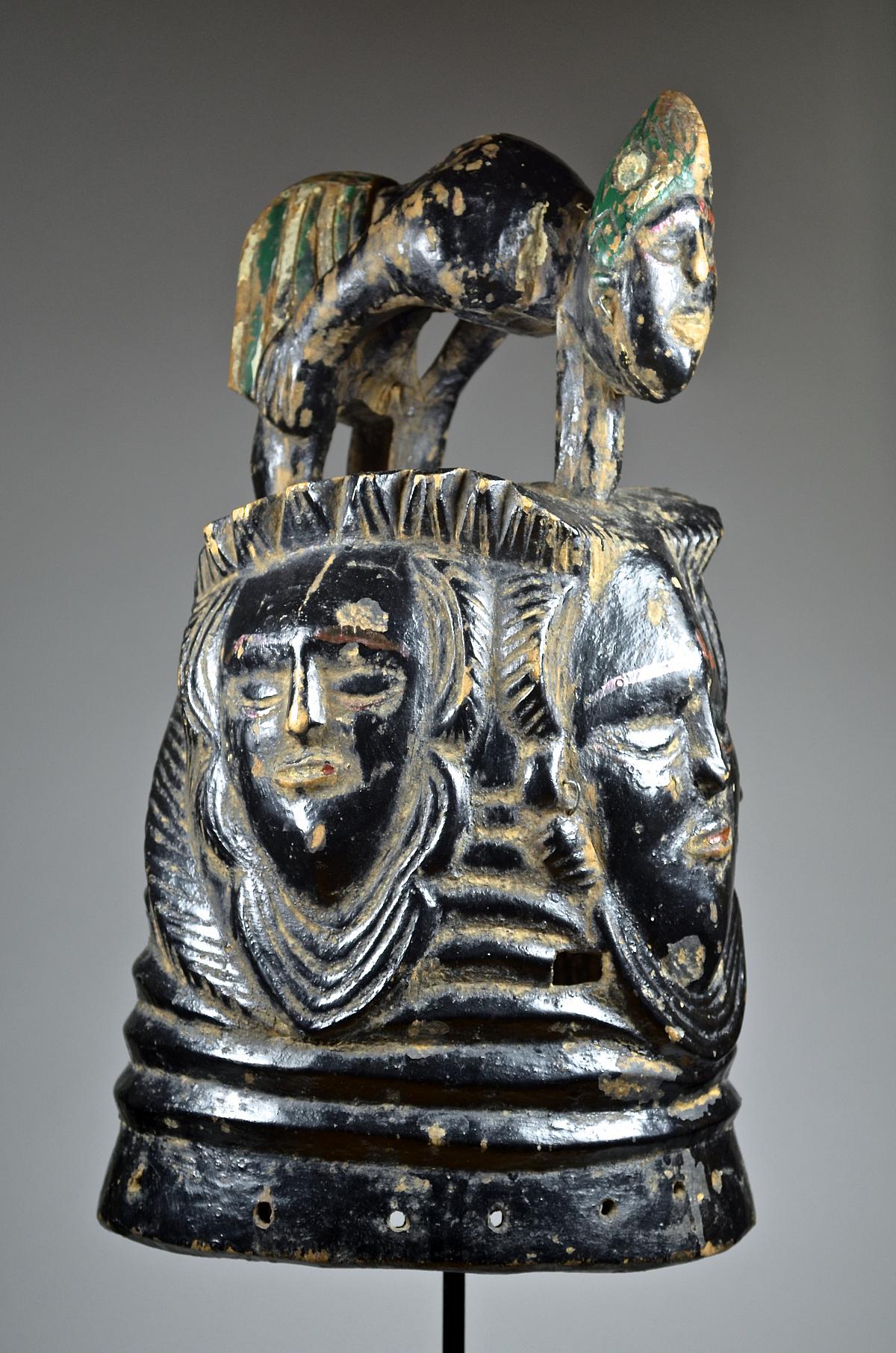
The Temne people reside primarily in the North-West of Sierra Leone and are often regulated by secret societies who oversee political life and initiation rites. Both men and women are involved in the complex procedures and ceremonies related to the coming of age. Young male initiates are under the guidance of the male Poro society, whose adult members take them from the village for several months or even years until they have reached a level of maturity. Girls are under the guidance of the women Sande society and are tutored in domestic skills, farming, sexual matters, dancing and medicine by female elders which helps prepare them for marriage. During initiation, the young girls wear a helmet mask known as a Bundu, representing the ancestors presiding over the initiates. This fantastic mask is of that type, and is certainly monumental in its presence. The four faces around the central portion are similar in appearance, each with eyes closed as if in meditation. They have a sparkly pink colour applied on the lips and eyebrows as well as metal earrings. The figure on top is riding on the crest, holding with one hand onto the elaborate coiffure with supreme confidence as if in complete command. The figure wears a stripped skirt and a peaked headdress which may indicate a high position in society, or a variety of helmet-masks worn during initiation. The power of this headdress elevates it to a true sculpture, in which one can see an interplay between the human and other worldly forces.
Provenance:
- Private collection, New York, USA
- Private collection, Washington D.C., USA
Exhibited:
- Newark Museum, New Jersey, USA
For a comparative objects and further information on the subject:
- d’Azevedo, W. L., 1973, Mask, Makers and Myth in Western Liberia, Oxford: Oxford University Press
- Boone, S. A., 1986, Radiance from the Waters: Ideals of Feminine Beauty in Mende Art. New Haven and London: Yale University Press
- Phillips, R. B., 1995, Representing Woman: Sande Masquerades of the Mende of Sierra Leone. Los Angeles: UCLA Fowler Museum of Cultural History
David Malík PhD
Founder/Director